SEO vs Google Adwords is a common debate nowadays. Which one is the best suit for your business depends on your business nature, goals, and some other important factors to consider.
Recent statistics disclose, that around 80% of businesses worldwide rely on Google Ads and 44% of businesses use SEO to drive traffic. Both strategies aim to bring traffic to your online business or website. Here, SEO is for organic solutions to drive traffic steadily. On the other side, Google AdWords is a paid promotion opportunity that drives traffic the fastest.
Let’s get stick with us till the end, and decide on your best suit. What, why, and how do they fulfill your marketing needs regarding your business?
What’s the difference between SEO Vs Google Ads? Advantages & Disadvantages
SEO and Google ads both have similarities along with a lot of differences. Let’s check the difference first.
Push vs. Pull Marketing
SEO is a pull marketing strategy that attracts users searching for related keywords. Instead of interrupting potential customers, SEO works by optimizing content. SEO makes your website easy to appear on SERPs when users enter related queries into search engines like Google or Bing.
You can think of SEO as a magnet. Because SEO helps users come across your website naturally because they are already interested in what you offer.
On the other hand, Google Ads is a push marketing strategy where businesses proactively place ads in front of potential customers. Instead of waiting for users to search, advertisers push messages through paid placements across Google Search, YouTube, Gmail, and display networks.
Traffic Sources & Ad Placements
Google Ads offers multiple advertising channels. It allows businesses to place ads across Google’s search network and other partner sites. This includes Google Search, Google Display Network (GDN), YouTube Ads, Gmail Ads, and Google Discover.
SEO, in contrast, relies solely on organic search rankings. When you optimize your website’s content, Google’s algorithm determines where it ranks on the SERP based on relevance, authority, and user experience- nothing in your hand here.
In addition, SEO doesn’t provide instant placements like Google Ads. It requires strategic content creation and optimization to improve visibility over time.
In essence, Google Ads places your brand where users are already browsing, while SEO ensures your site ranks when users actively search for relevant topics.
Business Goals & Expected Results
SEO is primarily focused on long-term visibility and organic traffic. Aiming to rank higher in search engine results for relevant queries. Also, generates leads, increases sales, and improves brand awareness if executed strategically.
Google Ads, on the other hand, is designed for immediate and specific outcomes.
While SEO relies on search algorithms to generate organic interest, Google Ads lets businesses define their goals upfront and tailor their campaigns accordingly.
If you need fast conversions or hyper-targeted reach, Google Ads is the go-to choice. However, if you want sustainable growth and consistent traffic, SEO is the long-term winner.
Speed & Timeline for Success
Google Ads delivers results almost instantly. As soon as a campaign is live, ads start competing in auctions. If they meet the bid and quality score criteria, they begin appearing in search results or across Google’s ad networks.
SEO, on the other hand, is a long-term strategy that requires patience. The upside? SEO efforts compound over time, meaning even if you stop producing content for a while, your rankings and traffic can continue to pay off for months or even years.
Initial Investment vs. Long-Term Effort
SEO requires continuous effort to maintain and improve rankings. In brief, SEO isn’t just a “set it and forget it” strategy. It demands ongoing adjustments to stay competitive.
Google Ads, in contrast, requires most of the work upfront during campaign setup.
In short, SEO is an ongoing investment in content, content marketing, and content optimization. At the same time, Google Ads requires an initial setup with periodic refinements.
Cost Comparison & ROI
The cost of SEO vs Google Adwords depends on various factors, including competition, industry, and strategy. However, the fundamental difference is how you pay for results.
With Google Ads, you pay for every click (PPC model). This means:
- Google ads costs are immediate and continuous. Moreover, once you stop paying, traffic stops.
- If your campaigns aren’t well-optimized, you might pay for clicks that don’t convert.
- In the case of competitive industries (e.g., finance, law, real estate) have high cost-per-click (CPC) rates, making ad costs expensive.
With SEO, you don’t pay for each click, making organic traffic technically “free.” However:
- SEO requires investment in content, optimization, and link-building.
- Initial costs can be high, but over time, organic traffic reduces customer acquisition costs.
- SEO continues to bring in traffic and leads even if you pause active efforts.
When comparing ROI, Google Ads offers instant but temporary results, while SEO builds long-term value and cumulative returns. Businesses with a budget for ads can see quicker results, but those investing in SEO gain sustainable growth over time.
Expansion Potential & Growth
Google Ads is highly scalable. Once you find a winning campaign, you can increase the budget or expand targeting to reach more people almost instantly.
However, scaling with Google Ads requires a bigger budget. As you spend more, competition can drive up costs, making ROI harder to maintain.
SEO growth, on the other hand, requires more effort, not just more budget.
In summary, Google Ads scales with budget, while SEO scales with effort and long-term strategy. If you need rapid expansion, paid ads are ideal. But if you’re aiming for sustainable, cost-effective growth, SEO is the better long-term play.
What Is SEO? & Key Benefits
SEO (Search Engine Optimization) is the process of improving your website’s visibility on search engines like Google, Bing, and Yahoo. The goal is to rank higher organically for relevant keywords.
SEO doesn’t require ongoing payments for clicks like paid ads. Instead, it focuses on long-term growth through content optimization, link-building, and technical improvements.
Key Benefits of SEO:
- Increases organic traffic
- Builds credibility & trust
- Cost-effective marketing method
- Improves user experience
- Generates long-term results
Types of SEO: On-Page, Off-Page & Technical
1. On-page SEO
On-page SEO focuses on optimizing individual pages to improve rankings. Basically, starts with in-depth keyword research. Here, you need to regularly update content and improve meta tags, titles, and other on-page SEO regarding keywords you research. On-page SEO also includes internal linking, image optimization, and SEO-optimized Content production.
People’s search terms in Google are transforming. So, producing UGC content and regularly publishing high-quality, search-driven articles is a must in SEO efforts
2. Off-page SEO
It is all about earning quality backlinks from relevant sites. It includes outbound link building, like guest posting.
3. Technical SEO
It ensures fast page speed, mobile-friendliness, and proper indexing. Actually, TSEO is the fundamental thing for search engines to get your website to crawl, index, and rank.
- Site speed optimization
- Mobile-friendliness
- Structured data (Schema Markup)
- Secure HTTPS
- Fixing broken links & errors
What Are Google Ads? & Key Benefits
Google Ads is a paid advertising platform of Google. That allows online and offline businesses to run ads on Google, collaborated websites, and apps.
Here, you pay only when someone clicks your ad.
Key Benefits of Google Ads:
- Instant visibility
- Highly targeted marketing method
- Measurable results
- Flexible budget control
- Multiple ad formats
Various Google Adwords Format
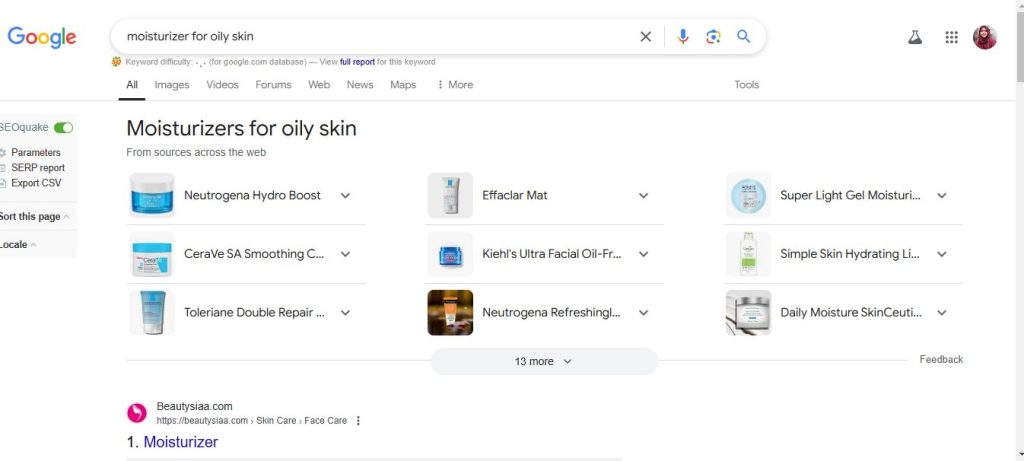
How does your ad show up in different Google collaborated places? The answer is that when someone types your targeted keyword, your ad will appear like this image below. Here’s the breakdown of the image showing sponsored sites in the top position of SERPs, with the rest being organic results or SEO.
Search Ads
It is text-based ads that appear on Google search results. Example: You have a shoe store. You bid on the keyword “moisturizer for oily skin.” So, your ad will appear at the top of Google for the targeted keyword. Best for product ads that need short descriptions like the image below.
Display Ads
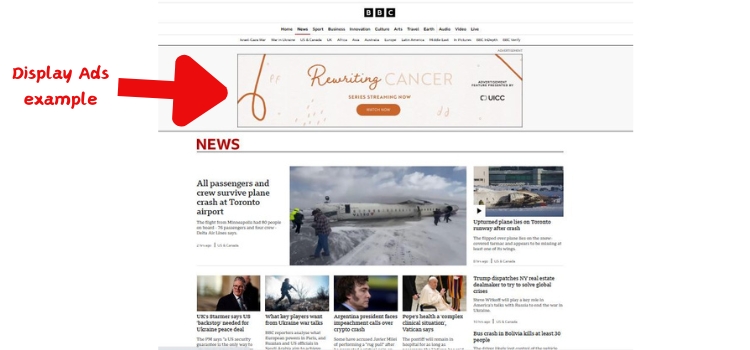
It is an image-based ad format. This kind of ad is shown on websites, apps, or YouTube. For instance, your banner ad for a travel agency appears on a blog about vacation destinations.
Video Ads
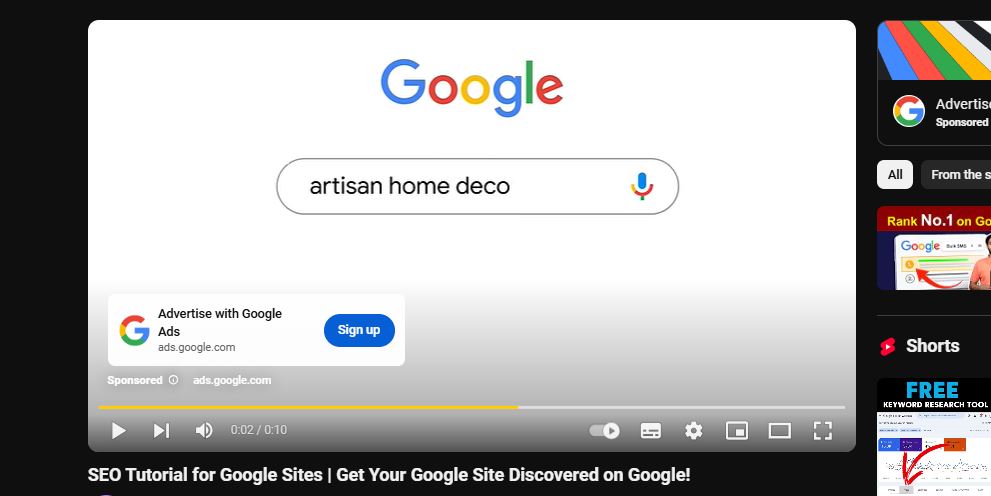
You may have seen this ad several times on YouTube before, during, or after a video. For example, a 15-second ad for a new smartphone plays before a YouTube tutorial.
Shopping Ads
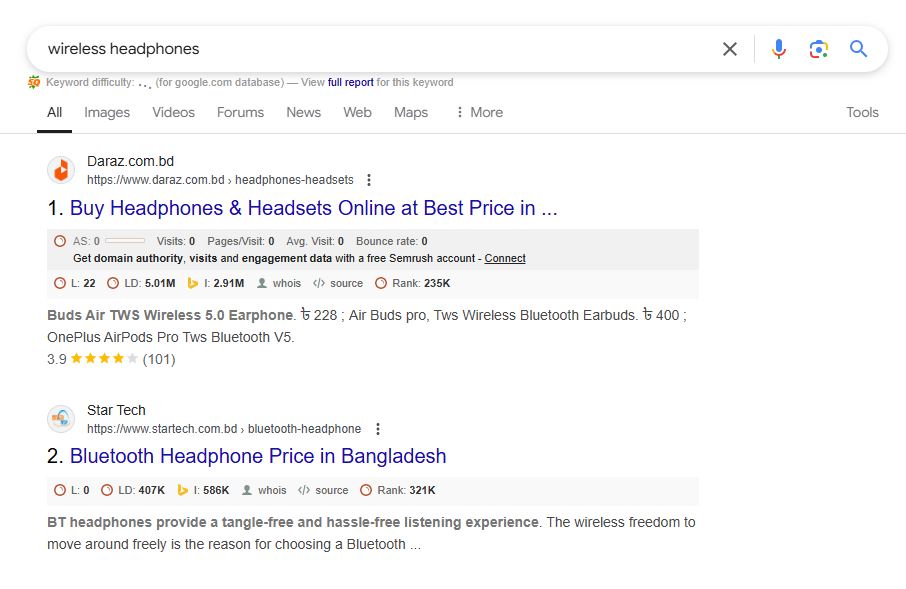
These kinds of ads are like product listings with images, prices, and store names. For example, a search for “wireless headphones” shows product images, prices, and links to buy.
App Promotion Ads
App promotion Ads encourage users to download an app.
Example: A game ad appears in the Play Store with an “Install” button.
Local Ads
Ads that promote nearby businesses on Google Maps or search.
Example: A “Coffee shop near me” search shows a promoted café with directions.
Performance Max Ads
AI-driven ads that appear across all Google platforms.
Example: A clothing brand’s ad appears on YouTube, Gmail, search, and websites.
When To Use SEO
SEO is the best choice when you’re focused on long-term growth rather than instant results. Consider SEO:
- If you want long-term stability, pick SEO over time, providing consistent traffic even if you pause active work.
- In case you don’t expect results in a hurry. SEO requires months of consistent optimization and content creation.
- Your targeted keywords have enough search volume and low competition. Suppose your industry has keywords with decent search volume (SV) and low keyword difficulty (KD). In that case, SEO can help you rank faster.
- You can’t afford paid advertising. Suppose budget constraints make PPC ads too expensive. In that case, SEO offers a cost-effective alternative for generating leads and sales over time.
When To Use Google Adwords
If you find climbing up organically challenging, you can choose Google AdWords blindly instead of SEO. Here, we explain some other facts that help you decide whether you need it or skip it.
- Are you looking for immediate results? Google Ads can drive traffic and conversions within hours of launching a campaign. In addition, it is a short-term solution that can increase sales, leads, or brand awareness.
- Sometimes, ranking organically for relevant keywords is too challenging. If your industry is highly competitive and SEO rankings seem unattainable, Google Ads can help you bypass organic difficulties.
- If you want to reach potential customers beyond search alone, Google Ads extends beyond search results, allowing you to advertise on YouTube, Gmail, the Google Display Network, and more.
Can I Use Both: SEO Vs Google Adwords
Absolutely! SEO and Google Ads work best when combined, complementing each other for both short-term and long-term success. Here’s how using both can benefit your business:
- Google Ads brings immediate traffic, while SEO builds organic visibility that lasts.
- Google Ads helps identify high-converting keywords, which you can then target in your SEO strategy.
- You can use paid ads to test different keywords and landing pages before investing in long-term SEO.
It’s a full-funnel Strategy. Here, Ads can drive awareness and quick sales, while SEO nurtures long-term customer relationships. If your budget allows, leveraging both SEO and Google Ads together is the best way to maximize visibility, conversions, and long-term growth.
Zappos: A Success Story of No SEO Vs Google Adwords But Blend Both Strategically
Zappos is a leading online shoe and clothing retailer. They built a success story by leveraging both Google Ads and SEO strategically. Zappos choose both strategies in their marketing. And, resulting in paid search for quick wins and SEO for long-term stability.
How To Combine: SEO Vs Google Adwords
Using SEO and Google Ads together can create a powerful marketing strategy that balances immediate results with long-term growth.
1. Use Google Ads to Test SEO Keywords
Before investing months over months into SEO, run Google Ads campaigns to test which keywords drive the most conversions. Once you find high-performing keywords, prioritize them in your SEO strategy.
3. Retarget SEO Visitors with Google Ads
Have you ever noticed that not all organic visitors convert to buyers? Here comes the strategy of remarketing ads. It helps to re-engage people who visited your site through SEO but didn’t take action.
4. Fill SEO Gaps with Paid Ads
It is like paid Ads complementing SEO. Some high-competition keywords may take months (or years) to rank organically. Instead of waiting, use Google Ads to secure top positions instantly while working on SEO in the background.
5. Optimize Landing Pages
You have to optimize your landing pages for user experience, fast loading speeds, and compelling CTAs. This is a combination of hacks that works for both SEO and PPC.
6. Use Data from Both Channels
You can use Google Ads data (clicks, conversion rates, CPC) to refine SEO keyword targeting. Conversely, SEO data (organic CTR, bounce rates) can be used to optimize Google Ads’ ad copy and targeting.
Faqs Of SEO Vs Google Adwords
1. Is SEO better than Google Ads?
It depends on your goals. SEO is better for long-term organic traffic, while Google Ads is better for quick results. The best strategy often combines both.
2. Should I learn first from SEO vs Google Adwords?
If you want long-term traffic growth, start with SEO. If you need instant results and paid advertising skills, learn Google Ads first. But knowing both is the best practice for staying ahead
3. What is Google AdWords in SEO?
Google AdWords (now Google Ads) is a paid advertising platform, while SEO is about organic ranking.
4. What is a Google Ads Agency?
A Google Ads agency is a specialized marketing firm that manages PPC campaigns for businesses.
5. How much does it cost to hire an agency for Google Ads?
No fixed cost. Actually, ad costs vary based on experience, campaign size, and industry. Agencies typically charge $500 to $5,000+ per month.
6. Can I pay Google for SEO?
No, Google does not accept payment for organic rankings.
7. Which is better, SEO or PPC?
It depends on many factors which is the best suit for your business. You need to choose accordingly, considering your business goal, budget, and timeframe.
8. Does SEO affect Google Ads?
Yes. A well-optimized website improves the landing page experience, which boosts your Google Ads Quality Score, reducing CPC and improving ad performance.
Final Thoughts on SEO vs Google Adwords
Choosing one from SEO vs Google Adwords is not a dilemma for you now. You choose either of them or may combine them accordingly. But, consider your business situation first. Considering facts like your goals, budget, and timeline is a must before you decide.
Happy Digital Marketing!